Research

Theoretical astrophysics, neutrino physics, computational methods

🌌
Current Research

Continuous Sheffer operator for elementary functions

📄 Preprint
Symbolic regression
CURRENT

Symbolic regression

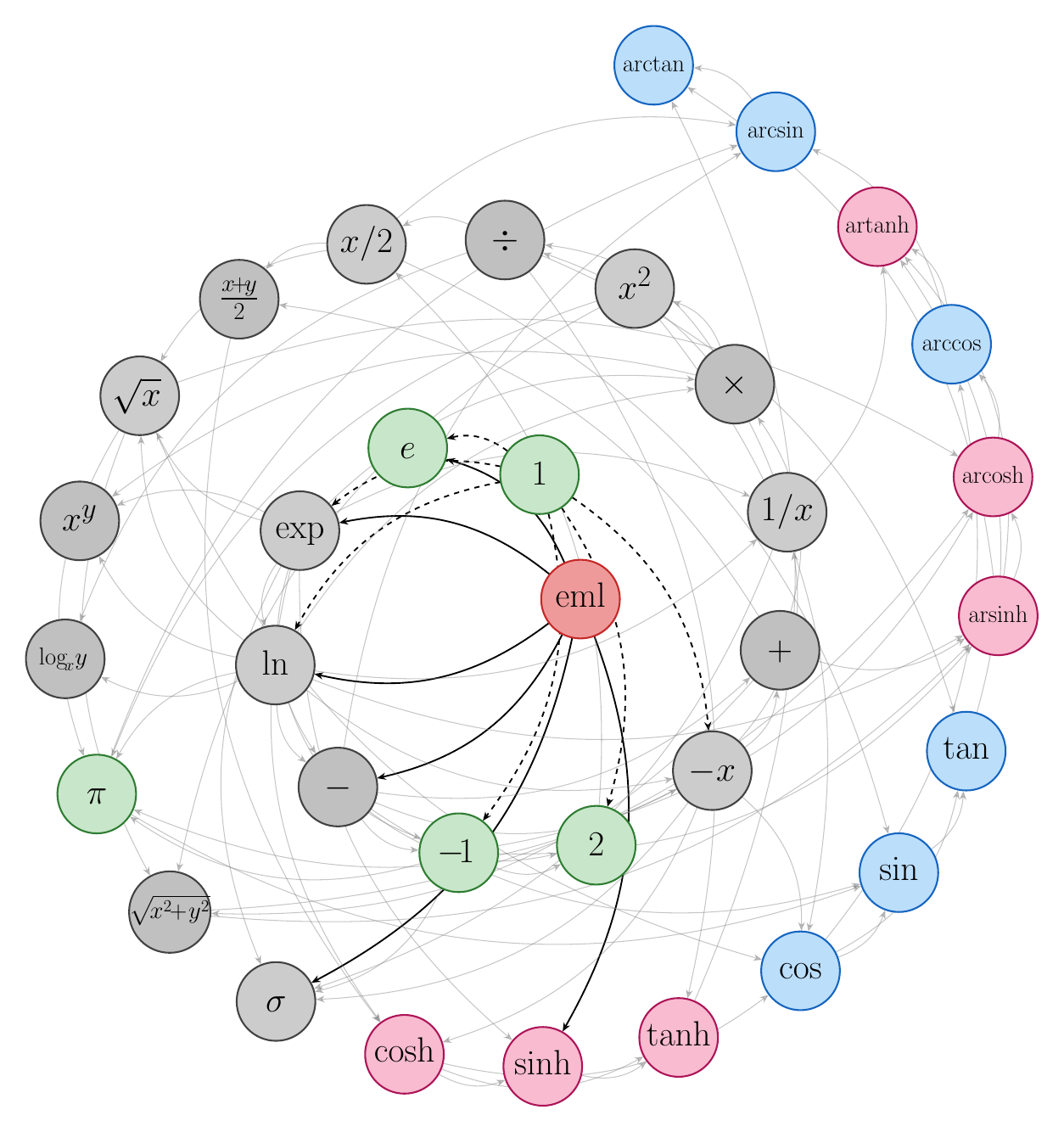
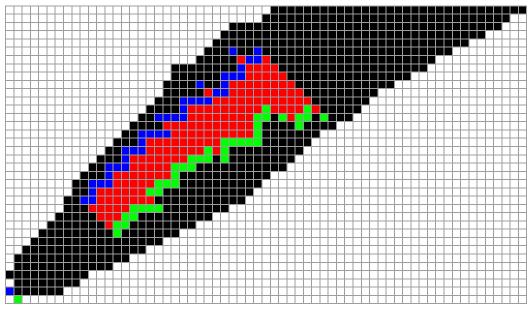
The EML, continuous Sheffer operator eml(x,y) = exp(x) - ln(y), together with the constant 1, generates all elementary functions (integers, fraction, radicals, rational functions, arithmetic, exponentials, logarithms, trigonometry), enabling efficient gradient-based symbolic regression.

Constant recognitionEML operatorElementary functionsGradient optimization
Elastic planetoids

Elastic planetoids

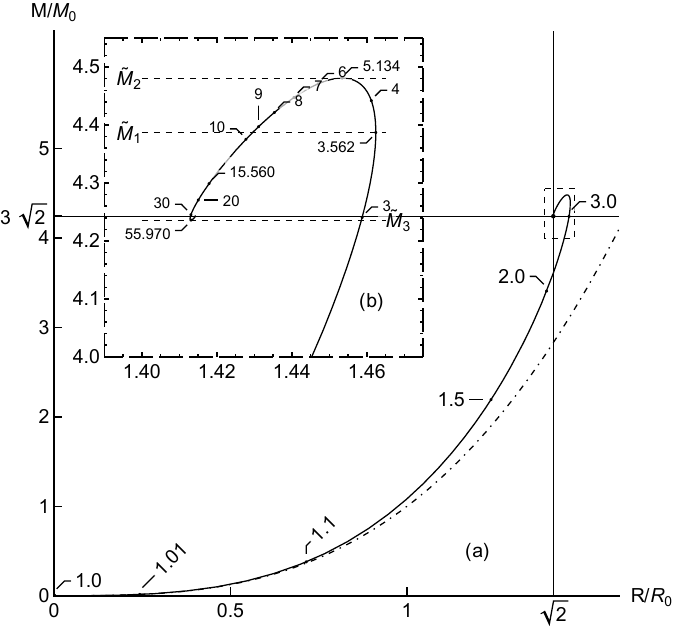
Self-gravitating elastic bodies in hydrostatic equilibrium with logarithmic equation of state and constant bulk modulus. Universal scaling properties allow all solutions from a single special function defined by Lane-Emden type ODE. The mass-radius relation reveals oscillatory patterns with maximum mass and radius limits. Analytical approximations for moment of inertia, binding energy, and gravitational potential, with applications to asteroids and moons (ApJ 2025, with B. Zbik).

Elastic EOSMass-radius relationAsteroids & moonsUniversal scaling
Special functions

Special functions

Efficient numerical evaluation of generalized Fermi-Dirac integrals and their derivatives for moderate and large values of parameters (Computer Physics Communications, with A. Gil, J. Segura, N.M. Temme). These integrals are essential in astrophysics (neutrino processes, stellar structure) and solid-state physics.

Fermi-Dirac integralsNumerical methodsComputer algebraAstrophysical applications

Dark matter accretion

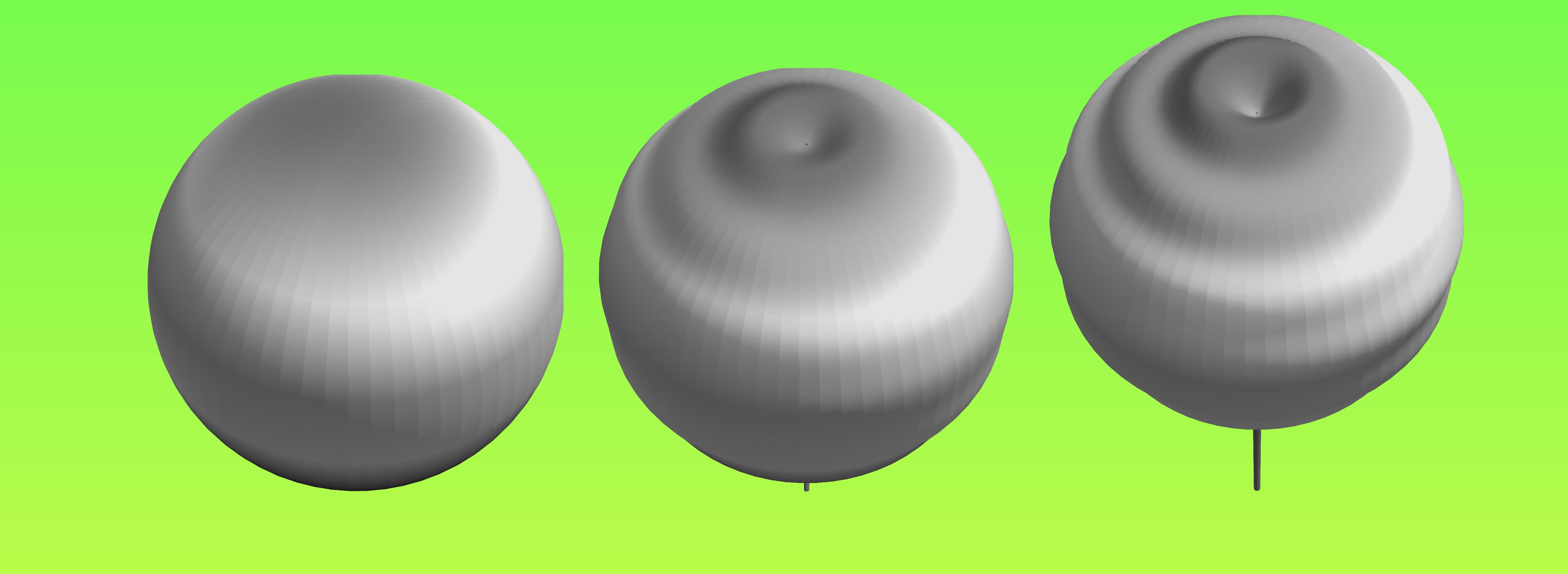
Exact analytical and Monte Carlo solutions for accretion of collisionless matter (relativistic Vlasov gas) onto moving Schwarzschild and Kerr black holes. The key result (Phys. Rev. Lett. 2021, with P. Mach): the mass accretion rate is a non-monotonic function of the black hole velocity. Follow-up work with A. Cieslik extends the methods to Kerr geometry and planar configurations.

Vlasov gasSchwarzschild & Kerr black holesExact solutionsMonte Carlo methods
Exoplanets

Exoplanets

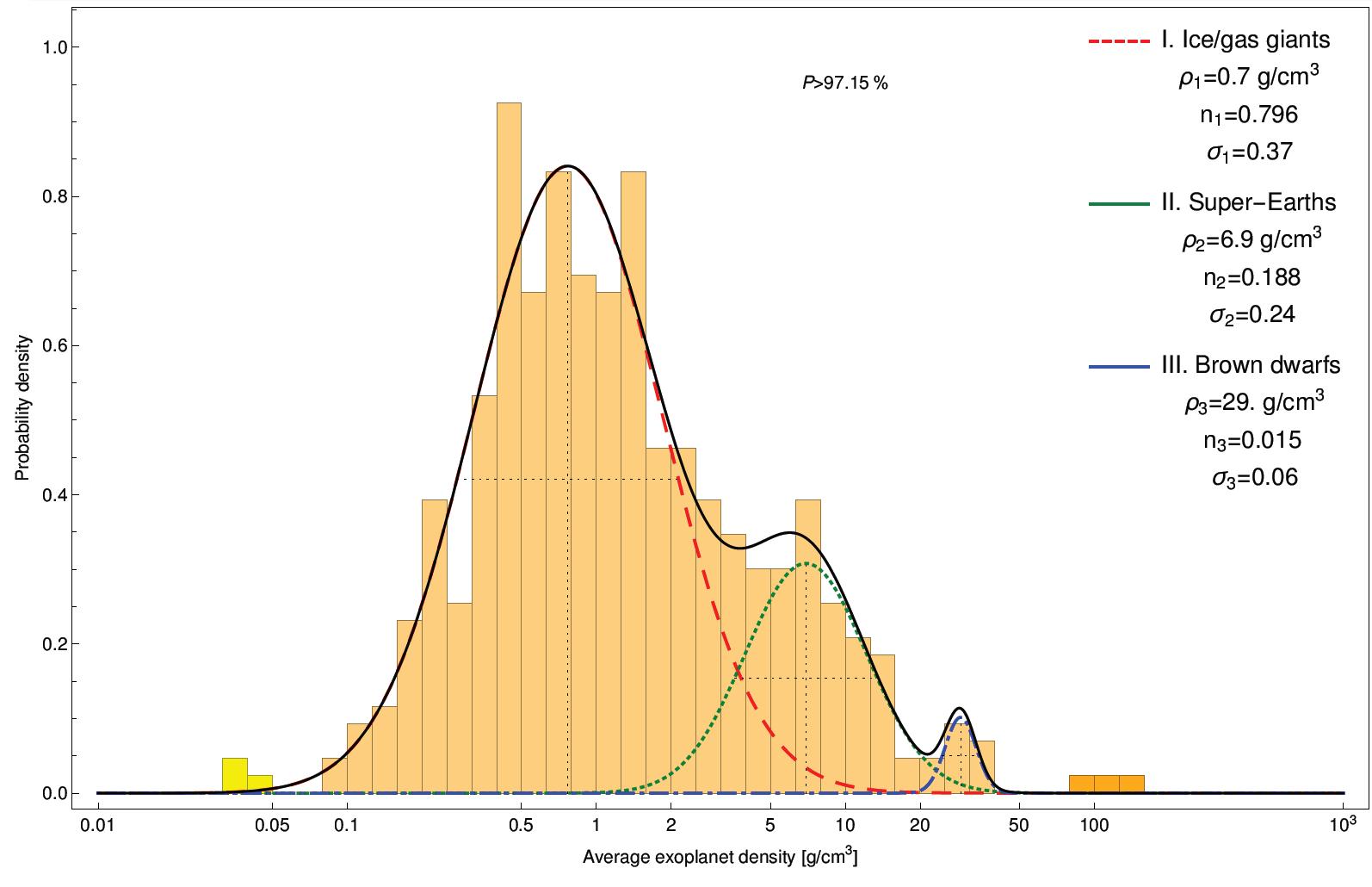
Classification of extrasolar planets by density reveals three distinct populations: ice/gas giants (~0.7 g/cc), iron/rock super-Earths (~7 g/cc), and objects consistent with brown dwarfs supported by electron degeneracy (~30 g/cc). Several extreme density planetary objects are also identified (Acta Phys. Pol. B, 2018, with J. Rafelski).

Density classificationSuper-EarthsGas giantsBrown dwarfs
Discrete geometry

Discrete geometry

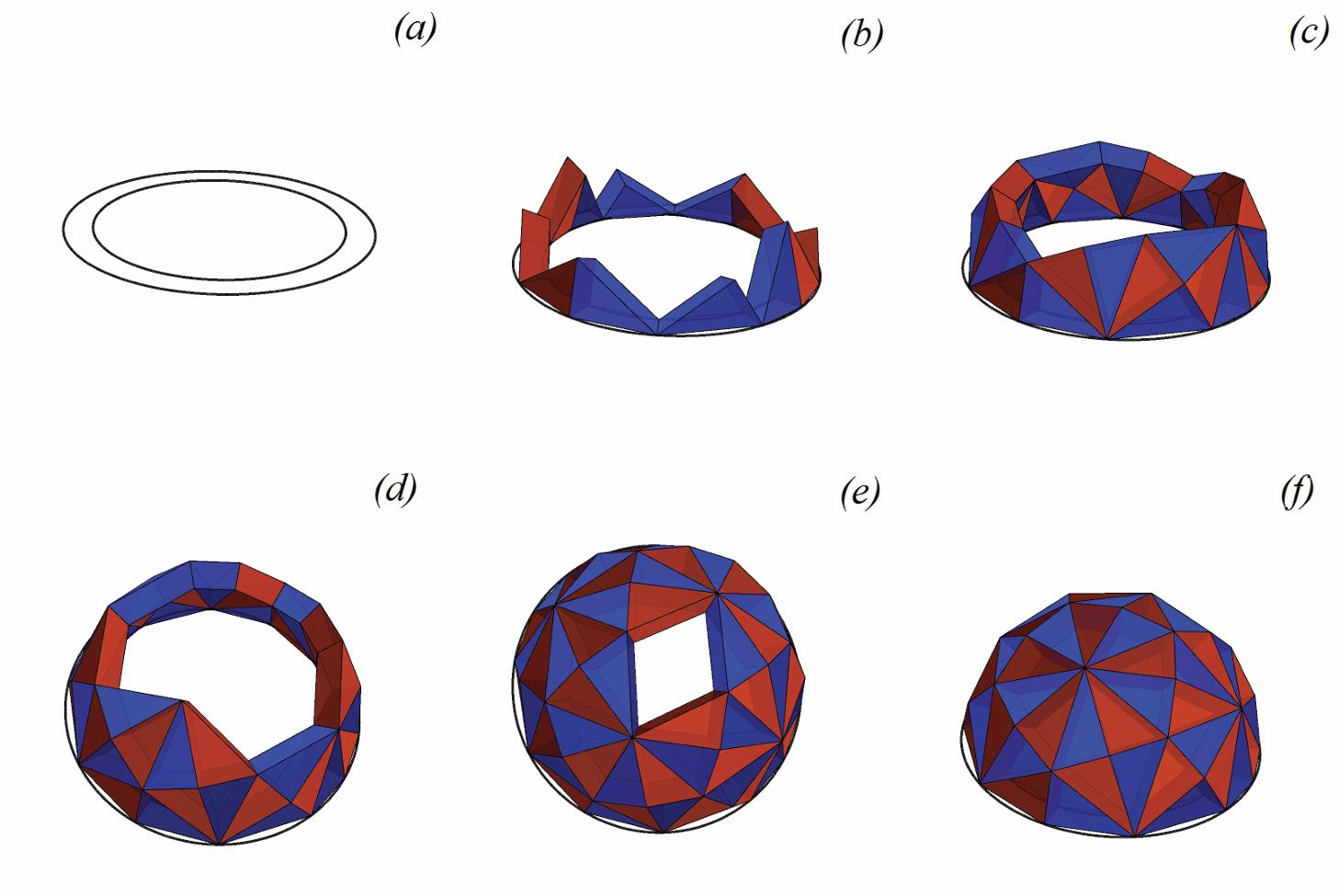
"How to Build the Perfect Igloo" — optimal discretization of a hemisphere into flat panels (Eureka, Cambridge, 2014). The problem of approximating curved surfaces with flat elements connects to geodesic dome construction, computational geometry, and practical architecture.

Hemisphere discretizationGeodesic domesComputational geometry
Pre-supernovae

Pre-supernovae

Neutrino emission from massive stars in the final stages of nuclear burning, hours to days before core-collapse supernova explosion. Calculated spectra from thermal pair annihilation, plasmon decay, and photo-neutrino processes provide signatures detectable by next-generation neutrino observatories — a potential early warning signal before the supernova.

Core collapseStellar evolutionSupernova early warningThermal neutrino processes
Neutrino astronomy

Neutrino astronomy

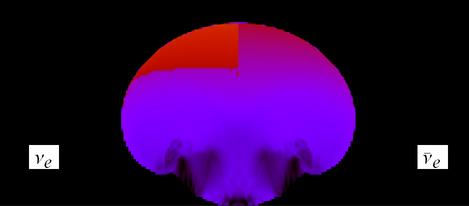
Using neutrinos as probes of thermonuclear (Type Ia) supernova explosions. Neutrino signatures distinguish between explosion mechanisms — pure deflagration produces a single neutrino peak, while delayed detonation yields two — even though these scenarios produce nearly identical electromagnetic signals. Estimated event rates for future large-scale detectors.

Type Ia supernovaeDeflagration vs detonationNeutrino detectionNeutrino observatories
Neutrino processes

Neutrino processes

Microphysics of neutrino production in hot dense astrophysical plasma. Rates and spectra for pair annihilation, plasmon decay, photo-neutrino and bremsstrahlung processes under nuclear statistical equilibrium (NSE). Published tabulated neutrino spectrum data for use in supernova and proto-neutron star modeling.

Pair annihilationPlasmon decayNuclear statistical equilibriumNeutrino spectra
Rotating barotropes

Rotating barotropes

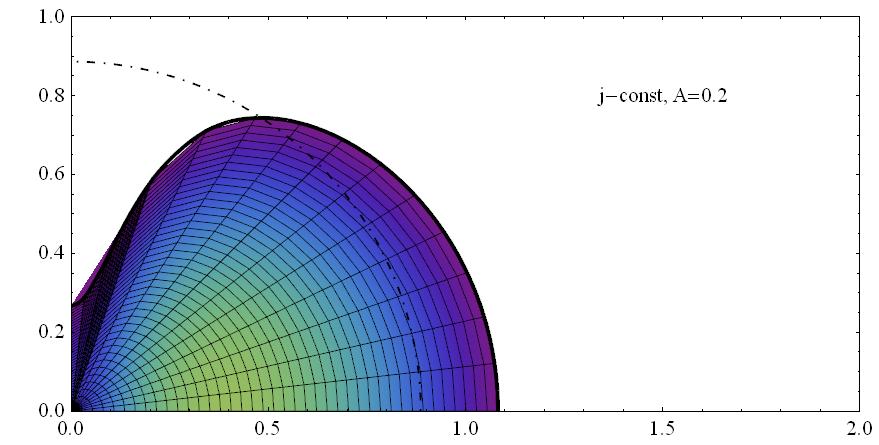
Analytical and numerical models of rapidly rotating self-gravitating bodies with barotropic equation of state. From exact solutions for the shape of polytropes with index unity (MNRAS 2017) to general-relativistic self-gravitating fluid tori and disks in motion around black holes (Phys. Rev. D 2018, with Mach, Malec et al.).

Rotating starsPolytropesSelf-gravitating toriGeneral relativity
Proto-neutron stars

Proto-neutron stars

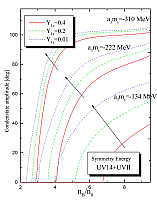
Formation and early evolution of proto-neutron stars — hot, neutrino-opaque remnants of core-collapse supernovae. Neutrino cooling mechanisms, equation of state of dense matter, and the Kelvin-Helmholtz contraction phase from a hot proto-neutron star to a cold neutron star.

Compact objectsNeutrino coolingEquation of stateKelvin-Helmholtz phase
3D simulations

3D simulations

Three-dimensional hydrodynamic simulations of core-collapse supernova explosions. Collaboration with T. Plewa (Florida State University) on shock revival in a 15 solar mass blue supergiant progenitor with SN 1987A energetics, nucleosynthetic yields, and element distribution (ApJ 2014).

3D hydrodynamicsSN 1987AShock revivalNucleosynthesis
Cosmological voids

Cosmological voids

Modeling of cosmological voids as underdensity regions in the static Einstein universe. Analytical solutions of the Tolman-Oppenheimer-Volkov equation with cosmological constant yield density contrast profiles and void radii consistent with observational data. Published in Phys. Rev. D 80, 103515 (2009).

Cosmological constantTOV equationLarge-scale structureDark energy